New build homes in Glen Innes Auckland: what buyers need to know in 2026
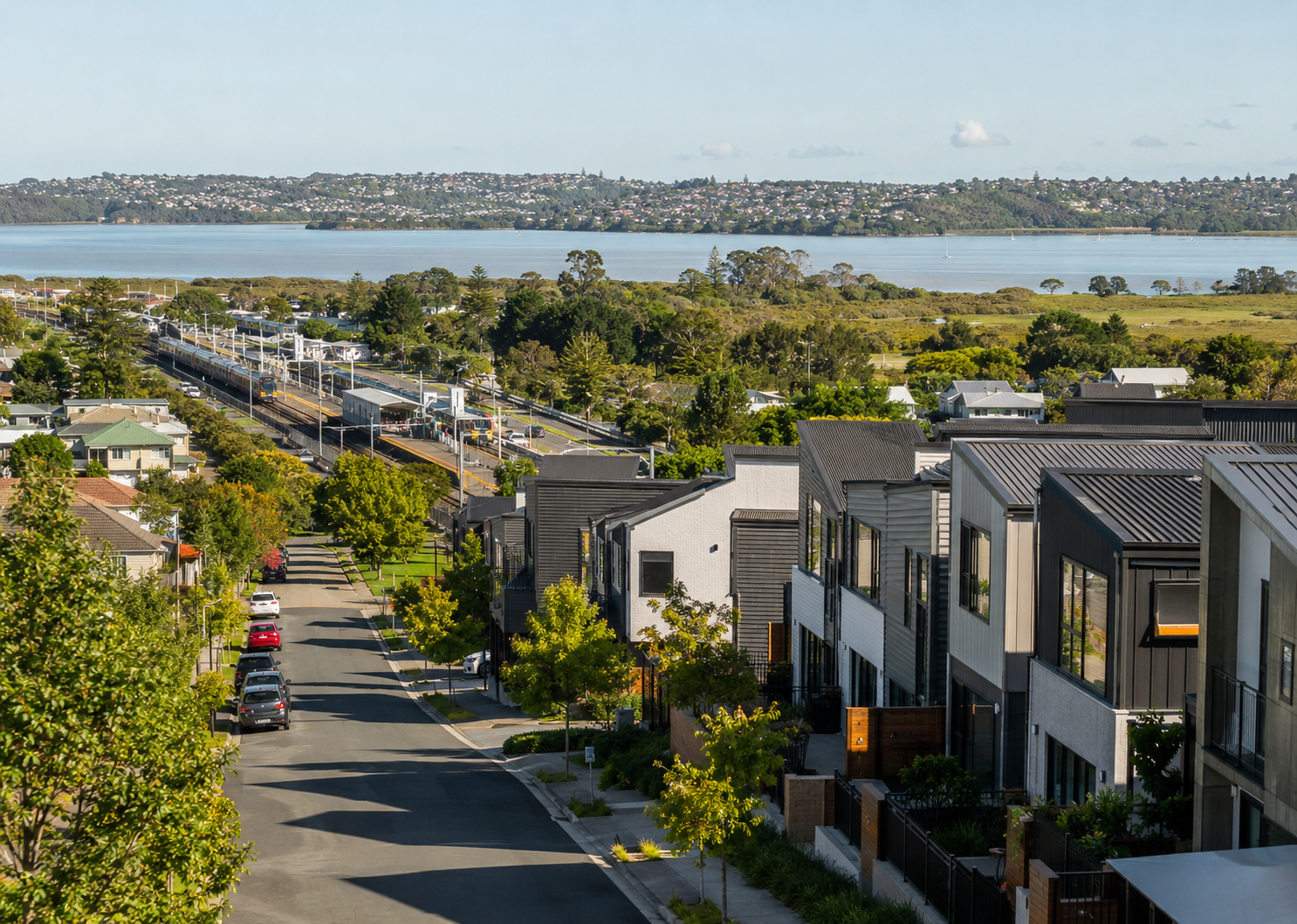
Glen Innes sits in East Auckland, roughly seven kilometres from the CBD, and for the last several years it has quietly become one of the most interesting suburbs for buyers looking at new build homes. It is not the most prominent name on Auckland's property map — but buyers who do their research consistently find that the fundamentals here are stronger than the suburb's profile would suggest.
This article covers what buyers need to understand about Glen Innes in 2026 — the location advantages, the transport picture, the schools, the type of housing stock being built, and what specifically Skyline Developers has delivered and is planning in the area.
Where Glen Innes sits in Auckland
Glen Innes is part of the Tamaki area of East Auckland, bordered by the Tamaki Estuary to the south and east, with Point England and Pt England Reserve nearby. The suburb connects directly to the Eastern rail line, making it one of the more accessible parts of East Auckland for commuters heading to Britomart or the CBD.
The surrounding area includes St Johns to the west, Point England to the east, and Panmure to the south. This corridor of East Auckland has been the subject of sustained investment — including the Tamaki Regeneration project, which has progressively replaced older housing stock with new-build developments over the past decade. The regeneration has brought infrastructure improvements, new parks, and a significant uplift in the quality of housing across the area.
Transport — the Eastern rail line advantage
Glen Innes train station sits on the Eastern line and connects to Britomart in approximately 20-25 minutes during peak hours, with services running regularly through the day and evening. For buyers who commute to the CBD or to Newmarket, this connection is a meaningful advantage over suburbs further east that rely entirely on road transport.
The broader Tamaki area also benefits from bus services connecting to Panmure, Sylvia Park, and the wider east Auckland network. The Glen Innes to Tamaki shared path — a dedicated walking and cycling route along the Tamaki Estuary — provides a car-free connection between Glen Innes and Tamaki, adding another dimension to the suburb's accessibility.
"For buyers weighing up East Auckland suburbs, the rail connection at Glen Innes is often the deciding factor. Suburbs further east require a car for every trip. Glen Innes gives you options."
Schools in the Glen Innes area
For buyers with families, the schooling landscape in Glen Innes and the surrounding area is worth understanding. The primary school zone includes Glen Innes School and Tamaki Primary School. For secondary schooling, Tamaki College serves much of the area and has been part of the broader Tamaki Regeneration investment, with new facilities and programmes introduced over recent years.
The private school network in Auckland is accessible from Glen Innes via rail and bus, making the suburb workable for families who use both zoned public schools and private options in other parts of the city.
What the housing stock looks like
Glen Innes has historically had a mix of older state housing and private residential stock — many of the older homes are timber-framed weatherboard construction from the 1950s to 1970s. The Tamaki Regeneration programme has progressively replaced a significant number of these with modern terrace housing and townhouses, changing the character of parts of the suburb considerably.
New builds in the area tend to be medium-density — townhouses and terrace homes on smaller sections, designed for efficient land use on lots that were previously occupied by single older dwellings. This type of housing suits the profile of buyers who want a modern home with low maintenance requirements, good insulation, and contemporary specifications without the land cost of a larger Auckland section.

The investor case for Glen Innes
Rental demand in Glen Innes is strong and consistent. The suburb sits within the catchment area for healthcare workers at Auckland City Hospital and Middlemore Hospital, teachers at the local schools, and workers at Sylvia Park — one of Auckland's largest employment and retail hubs. This breadth of demand sources means rental vacancies in the area have historically been low.
New build rental properties in Glen Innes also benefit from the current regulatory environment. Properties with a building consent issued on or after 27 March 2020 attract the five-year bright-line period rather than ten years, and the reinstatement of interest deductibility from 2025 means investors can once again deduct mortgage interest against rental income. These combined factors have improved the investment calculus for new builds in the area compared to two years ago.
What Skyline Developers has built in Glen Innes
Skyline Developers has completed two projects in the Glen Innes area. 122 Leybourne Circle delivered five homes — a mix of 4 and 5-bedroom townhouses with Bosch appliance packages, Blum soft-close cabinetry, Villeroy and Boch bathrooms, Grohe tapware, and EV-ready garages. The project is now sold and fully occupied.
24 Elstree Avenue in the neighbouring Point England area delivered six 4-bedroom standalone homes with the same premium specification, targeting families looking for a larger footprint than a townhouse provides. The Aquacomb water management system, Daikin heat pump, and Caesarstone benchtops reflect the same commitment to specification quality that runs across all Skyline projects.
What is available and coming up
Skyline Developers currently has properties available and upcoming in East Auckland. Our homes for sale page lists current available lots with bedroom counts, specifications, and status. For upcoming projects not yet listed publicly, contact us directly — we maintain a register of buyers who want to be notified when new developments come to market before they are publicly listed.
If you are considering a new build purchase in Glen Innes or the broader East Auckland area and have questions about our projects, specifications, or the purchasing process, we are happy to talk through the details. Call us on 022 537 1386 or email info@skylinedevelopers.com.