Buying off the plan in Auckland 2026: a complete guide for buyers
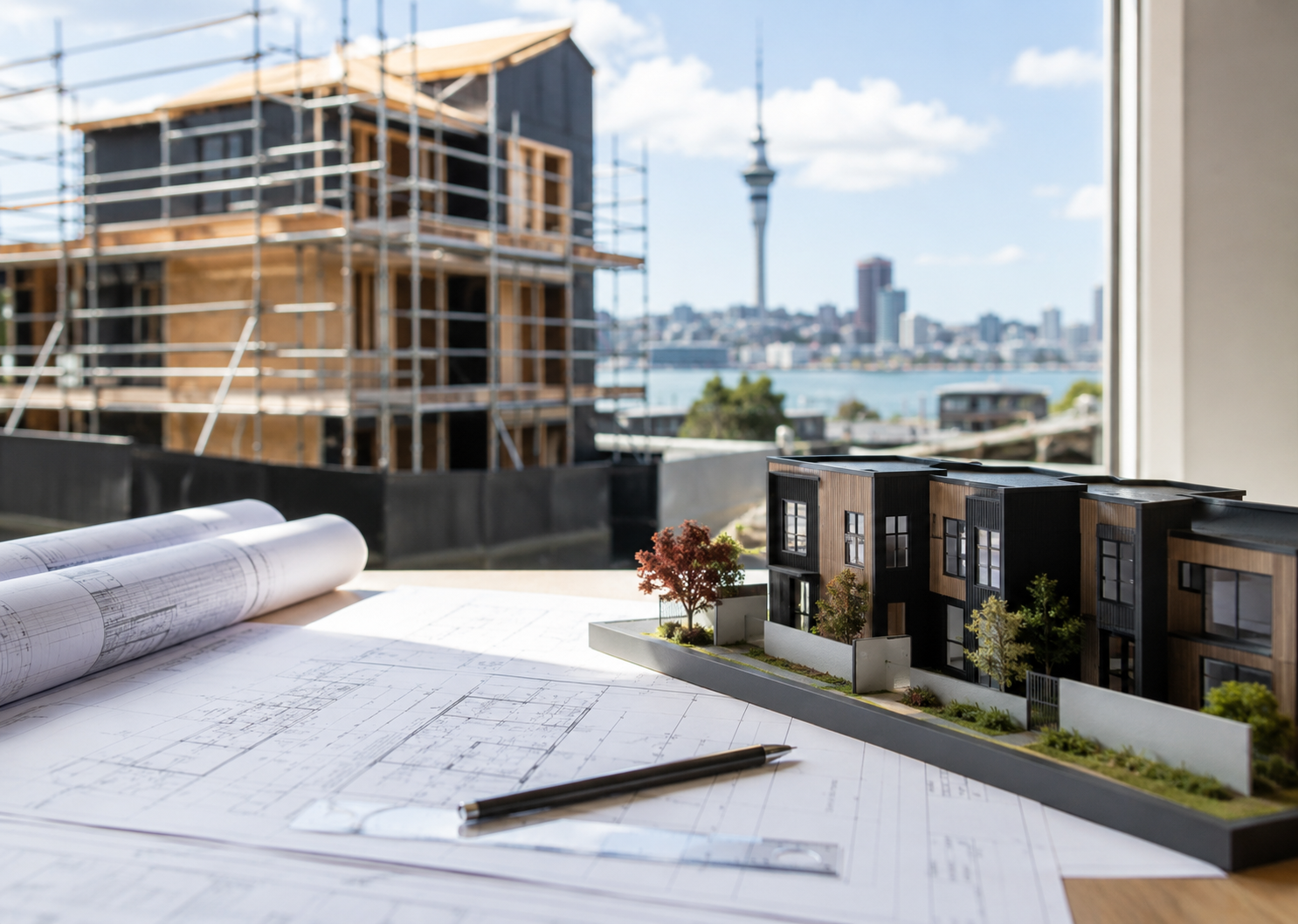
"Buying off the plan" is a phrase used loosely in the Auckland property market, and it covers a range of purchasing scenarios that carry quite different levels of risk and reward. For buyers considering this route in 2026, understanding exactly what stage a development is at - and what protections apply at each stage - is essential before signing anything.
This guide walks through what off the plan buying actually means, the different stages a development can be at when it is marketed, what legal protections exist for buyers, and the practical questions worth asking before you commit.
What "off the plan" actually means
At its broadest, off the plan means purchasing a property before it is physically complete - sometimes before construction has even started. But within that broad definition there are meaningfully different stages:
- Pre-consent: The developer is marketing a concept design that has not yet received resource or building consent from council. This is the highest-risk stage - the design may change materially, the timeline is uncertain, and there is no guarantee the project proceeds as marketed.
- Consented, pre-construction: Resource and building consent has been granted but construction has not started. The design is locked in and the project has cleared its major regulatory hurdle, though construction timing and any site issues remain unknowns.
- Under construction: Physical work has begun. At this stage buyers can usually see the build progressing and have more confidence in the delivery timeline, though completion date estimates can still shift.
- Near completion: The building is largely finished and buyers can often walk through or view very close to the final product before settlement. This carries the lowest risk of the off the plan categories, sometimes described as "near new" rather than true off the plan.
Understanding which stage a development is actually at - regardless of how it is marketed - is the single most important piece of due diligence for an off the plan purchase.
"Ask the developer directly: has building consent been issued, and can I see the consent number? A straight answer to this question tells you more about the real risk profile of the purchase than almost anything else."
Why buyers choose off the plan purchases
Despite the additional risk relative to buying a completed home, off the plan purchases remain popular in Auckland for several reasons:
- Price certainty: The purchase price is locked in at the time of signing, regardless of any cost increases the developer experiences during construction. In a market where construction costs have been volatile, this protects the buyer from inflation risk.
- Time to arrange finance: Buyers typically have months between signing the agreement and settlement, providing time to arrange mortgage finance, sell an existing property, or simply save additional deposit.
- Brand new building standards: A new build meets current Building Code requirements and Healthy Homes standards from day one, without the retrofit costs that older properties often require.
- Specification choice: Depending on the construction stage at the time of purchase, buyers sometimes have input into finishes, layouts, or inclusions that would not be possible with a completed home.
Legal protections for off the plan buyers in New Zealand
New Zealand law provides several protections specific to off the plan purchases, though buyers need to actively understand and exercise these protections rather than assume they apply automatically.
Sunset clauses
A sunset clause sets a date by which the development must be completed, after which either party may cancel the contract. These clauses exist to protect both buyer and developer from open-ended uncertainty, but the specific terms matter considerably. Have your solicitor review the sunset clause date, what triggers it, and what happens to your deposit if the contract is cancelled.
Deposit protection
Deposits on off the plan purchases in New Zealand are typically held in a solicitor's trust account or by a stakeholder, rather than being paid directly to the developer. Confirm exactly how your deposit will be held and what conditions need to be met before it is released to the developer.
Pre-settlement inspection rights
Buyers are entitled to inspect the completed property before settlement to confirm it matches the agreed specification. If defects are found, you have the right to require these are addressed before settlement, or to negotiate a settlement adjustment. Do not waive this inspection right even if the developer suggests it is unnecessary.
Warranty periods
New build properties in New Zealand typically carry a 12-month defects liability period during which the developer must remediate issues at their cost, alongside a 10-year weathertightness guarantee under the Building Act. Understand what is covered, what the claims process looks like, and who is responsible if the developer is no longer trading.
Questions to ask before signing an off the plan agreement
- What stage is the development actually at - has consent been issued, and can I see the consent number?
- What is the sunset clause date, and under what conditions can either party invoke it?
- How and where will my deposit be held until settlement?
- What is the fixed specification, and what happens if the developer wants to substitute materials?
- Who is the main contractor, and what is their track record?
- What body corporate structure applies, and what are the projected levies?
- What is the developer's financial position, and is the project funded through a recognised lender?
- Can I speak to previous buyers from the developer's completed projects?
How Skyline Developers approaches off the plan sales
At Skyline Developers, we only market off the plan properties once building consent has been issued and the design is locked in - we do not sell purely conceptual, pre-consent developments. This means buyers purchasing off the plan with us have certainty on the design, the specification, and the regulatory status of the project from the point of sale.
Our completed Auckland portfolio - 122 Leybourne Circle and 65 Apirana Avenue - is publicly visible and verifiable, and we are happy to connect prospective buyers with previous purchasers who can speak to their experience working with us.
If you are considering an off the plan purchase in Auckland and want to discuss current or upcoming Skyline Developers projects, contact us at info@skylinedevelopers.com or call 022 537 1386. We are happy to walk through our current availability and answer any questions about our process.